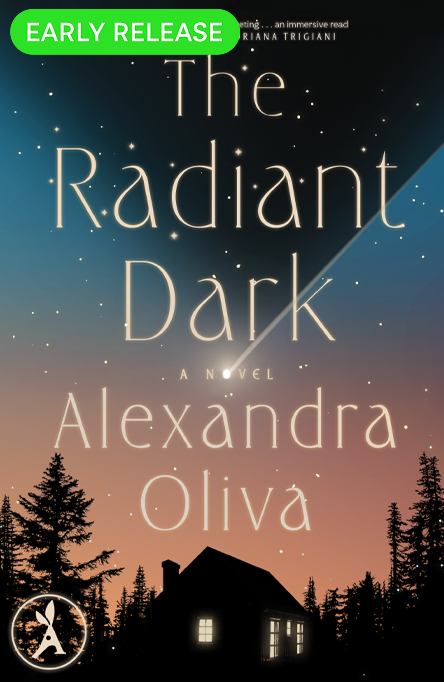
Arrival meets Wild Dark Shore in this captivating novel that follows a family over fifty years—a bold and compassionate exploration of the universe around us and what it truly means to be human.
Domestic abuse, child abuse.
It’s March 1980, and Carol Girard and her husband are living an ordinary life in a small town in the Adirondacks. They have just had their first child, and though Carol is struggling with the challenges of new motherhood, her future seems clear. Until something extraordinary happens: an inexplicable flickering of light in the sky, which is ultimately determined to be communication from intelligent life on another planet. But these beings are eleven light-years away, and nothing is known about them other than the fact that they seem to know we exist too. And so begins a decades-long exchange of messages with this mysterious, faraway civilization.
As humanity reels from a shifting understanding of its place in the universe, we follow the stories of the Girard family: Carol, whose fascination with this other life sparks a desperate search for spiritual meaning; Michael, her loyal son, who finds solace not in the stars above his head but in the ground beneath his feet; and Ro, Carol’s bright and ambitious daughter, whose childhood goal to work in interstellar communication will evolve into something far grander.
Tracing five decades of love, loss, ambition, and self-discovery, The Radiant Dark is a stunning examination of a family navigating their lives with the knowledge that we are not alone.
Don't just take our word for it...
“Like the stars it centers around, The Radiant Dark is incandescent. A captivating family saga with a delicately speculative edge, this one’s a masterpiece.”
– Sarah Jessica Parker, SJP Lit
“Alexandra Oliva is a master storyteller, her work is atmospheric, imaginative, and riveting. The Radiant Dark is a sprawling epic of the fate of one family, foretold in the stars through time and space. The Girard family is unforgettable in their ties to one another and the universe they live in. It’s all here. Mystery. Wonder. Surprise—and the power of love. An immersive read that will lead you home.”
– Adriana Trigiani, bestselling author of The View from Lake Como
“The Radiant Dark is unforgettable. Daring and expansive, soul-stirring, and precise, this is a novel about love and belonging—to our ancestors and descendants, our families and ourselves, and to one another. I ached and I cried, my heart was filled with a gentle hope for the people who come after us. Oliva writes with triumphant beauty: we are not alone.”
– Eliana Ramage, author of To the Moon and Back
Taste the very first page
On the night Carol Girard’s son was supposed to have been born—February 3, 1980 something flashes in the sky. Three look-at-me bursts, right by Saturn. Despite how many will later remember it, the event isn’t bright enough to blind. It’s more of a flicker, really, peaking at an apparent magnitude a bit weaker than that of the North Star. The flashes can’t be seen from most cities, but the unusual light tickles the attention of thousands of individuals across the dark side of the globe. People camping in the desert, drunks and night watchmen, ranch hands out for a late-night piss, a handful of actual astronomers—these are the first to wonder: What was that?
Carol doesn’t see the anomaly. When it occurs, she is sitting in bed, trying not to cry. Her husband, Jake, is snoring beside her, and their infant son is pressed to her exposed chest. Though today is the baby’s due date, he was born twenty-six days early. Twenty-six days that have, each and every one, been a struggle for these bleary-eyed new parents, especially the mother. But even if Carol were standing outside at that late hour, she couldn’t have seen the flashes. It gets dark enough in this town—the Milky Way is often visible as a gorgeous, glittering smear overhead—but the small, rustic home Carol and Jake share is cupped by New York’s Adirondack mountains. On this night, at that hour, their view of Saturn is obscured by sloping ridgelines and reaching trees.
However, enough other people do have a clear line of sight that the strange late-night flickering earns a passing mention on a morning news show the next day, and around lunchtime, Carol exhausted as she once again crams her breast into her infant boy’s mouth—hears a radio say: Saturn flashed last night. I hope it doesn’t blow up or something. Never mind that astronomers are already saying it wasn’t Saturn, couldn’t be Saturn.
Can a planet just . . . blow up? Carol doesn’t know. She can name all the planets, but not in order. Saturn is the one with the rings, right? Reaching over her son’s crusty, cradle-cap speckled head, she turns off the radio. Her whole world has shifted in the last month. Overnight, really: One day she was one human being, the next she was two. She feels emptied, panicked, torn.
She doesn’t have it in herself to care about the sky.
Twelve hours after these initial flashes, the far side of Earth sees an identical burst of lights. This time, enough people are looking to confirm that the flashes aren’t Saturn. They’re just occurring in the same section of sky that, from Earth’s perspective, Saturn currently appears to be passing through—an area near Virgo’s shoulder, if you know your constellations.
Speculation grows. The flashes are likely originating in or near our atmosphere, one expert says; perhaps they’re Soviet lasers or secret spy satellites accidentally catching light. Another astronomer posits that they could be the result of a reoccurring nova event elsewhere in our galaxy; the pattern is strange, sure, but it could be some complicated scenario involving eclipsing bodies and thick interstellar clouds. It’s likely little burning bits of something disintegrating in our atmosphere, the first expert insists. Don’t get excited.
If there is anything like a public consensus during that first day, it is this: Let’s see if it happens again.
You might also like
Dissolution
A woman dives into her husband’s memories to uncover a decades-old feud threatening reality itself in this staggering technothriller from the bestselling author of Ascension.
Death of the Author
A disabled Nigerian American woman pens a wildly successful Sci-Fi novel, but as her fame rises, she loses control of the narrative. This is a story unlike anything you’ve read before.
We Lived on the Horizon
The acclaimed author of The Book of Speculation returns with an engrossing new novel about a bio-prosthetic surgeon and her personal AI as they are drawn into a revolution.
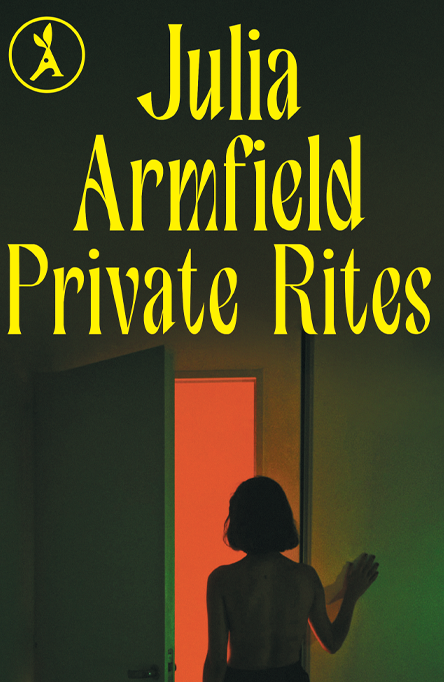
Private Rites
A speculative reimagining of King Lear, centering three sisters navigating queer love and loss in a drowning world.

American Rapture
The instant USA Today bestseller from CJ Leede, author of Maeve Fly—a scorching and sweeping new novel about the end of the world as we know it.
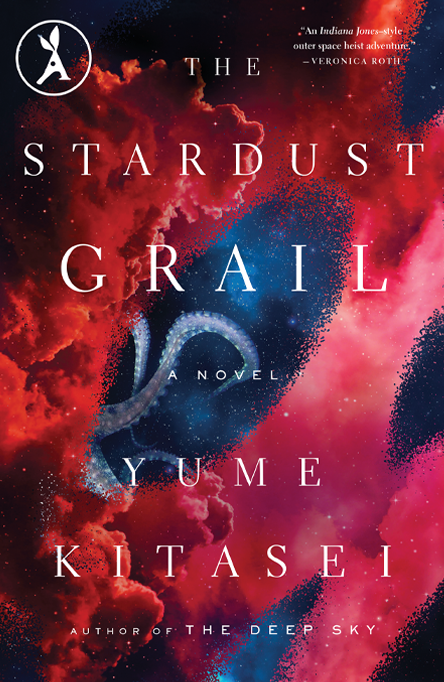
The Stardust Grail
Save one world. Doom her own. From the acclaimed author of The Deep Sky comes a thrilling anti-colonial space heist to save an alien civilization.
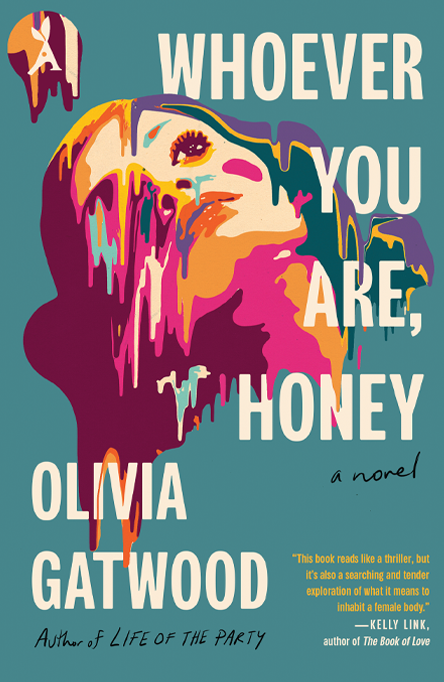
Whoever You Are, Honey
This darkly brilliant debut novel explores how women shape themselves beneath the gaze of love, friendship, and the algorithm—by a thrilling feminist voice for the age of AI.
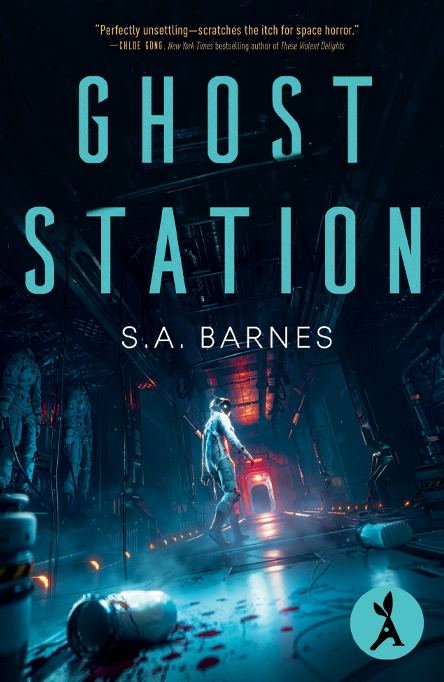
Ghost Station
A crew must try to survive on an ancient, abandoned planet in the latest space horror novel from S.A. Barnes, acclaimed author of Dead Silence.